Description
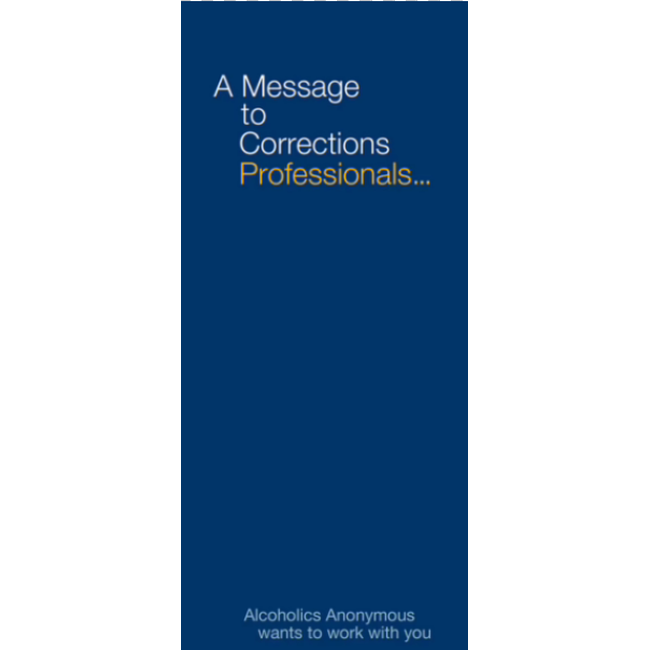
A Message to Correctional Professionals” is an official, General Service Conference-approved pamphlet by Alcoholics Anonymous (A.A.). It outlines what A.A. is, what it does, and how it can help prison administrators, probation officers, and judicial staff manage alcohol-dependent individuals within the correctional system. [1]
The pamphlet acts as a resource to clarify the boundaries and capabilities of the A.A. program. It explicitly details what A.A. does not do to help professionals understand how the program can—and cannot—integrate with the justice system.
What A.A. Does
-
- Provides support and peer mentorship to alcoholics through regular meetings inside correctional facilities.
- Shares personal experience, strength, and hope to help individuals achieve and maintain sobriety.
- Helps inmates transition back into society by connecting them with local A.A. groups upon release.
What A.A. Does Not Do
To prevent conflicts with legal and institutional mandates, A.A. strictly avoids the following:
-
- No Legal or Medical Interference: Does not provide medical/psychiatric treatment, diagnoses, or letters of reference for parole boards, lawyers, or courts.
- No Material Aid: Does not provide money, housing, clothing, jobs, or vocational counseling.
- No Record-Keeping: Does not keep attendance records, case histories, or monitor members to ensure they stay sober.
- No Mandatory Coercion: Cannot furnish the initial motivation for an individual to get sober or solicit members.
For professionals looking to establish an A.A. group inside a facility or request informational presentations for staff, A.A.’s General Service Office (G.S.O.) and local service committees act as the main points of contact.